





Pompeii (or Pompei), in Naples, Italy, is much more than an archaeological park; it's a destination where history, culture, and authenticity merge, ideal for those who travel with purpose and seek an experience that transcends mere tourism. Join us on this journey where we share facts, experiences, and all the tips to plan a memorable visit — from the essentials to the secrets we only discovered by living the place with the help of locals.
What is Pompeii and why is it famous? A little context...
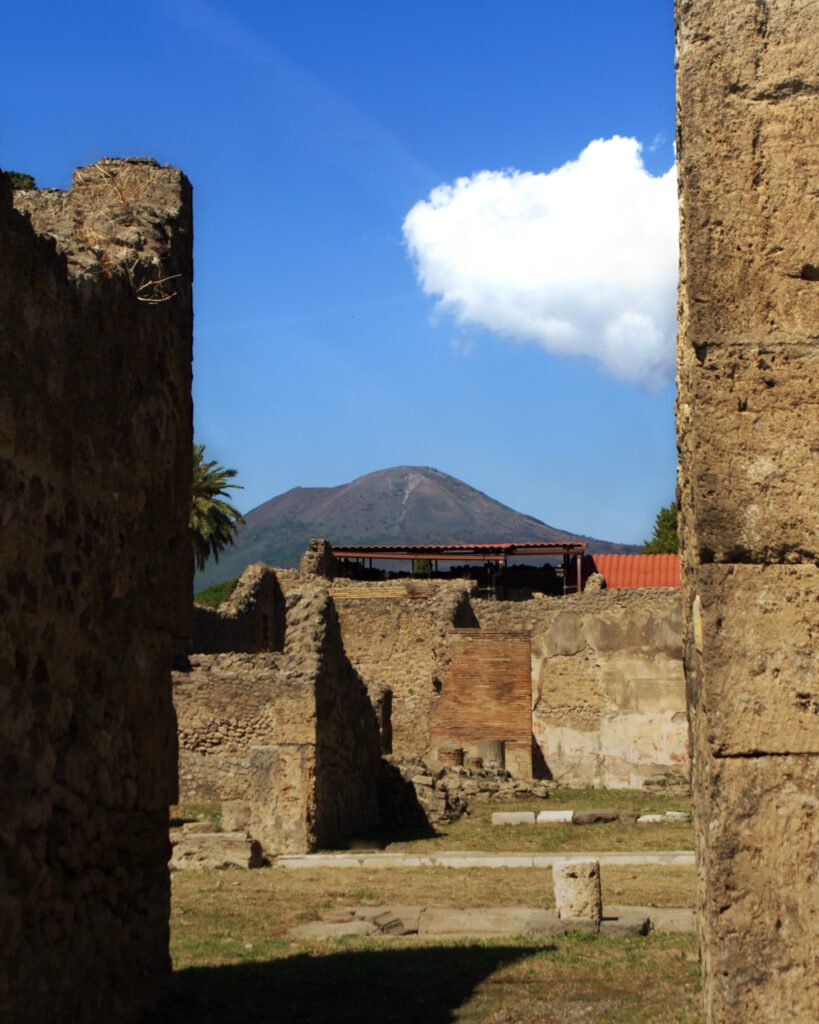
Pompeii is an ancient Roman city located at the foot of Mount Vesuvius, famous for having been buried by the volcano's eruption in 79 AD. Its ruins are so well-preserved that they literally allow you to travel back in time and understand, in detail, life in classical Rome. Discovering Pompeii means understanding its tragedy, its culture, and the astonishing phenomenon that preserved it almost intact for centuries.
History of Pompeii: From a Living City to an Archaeological Legend
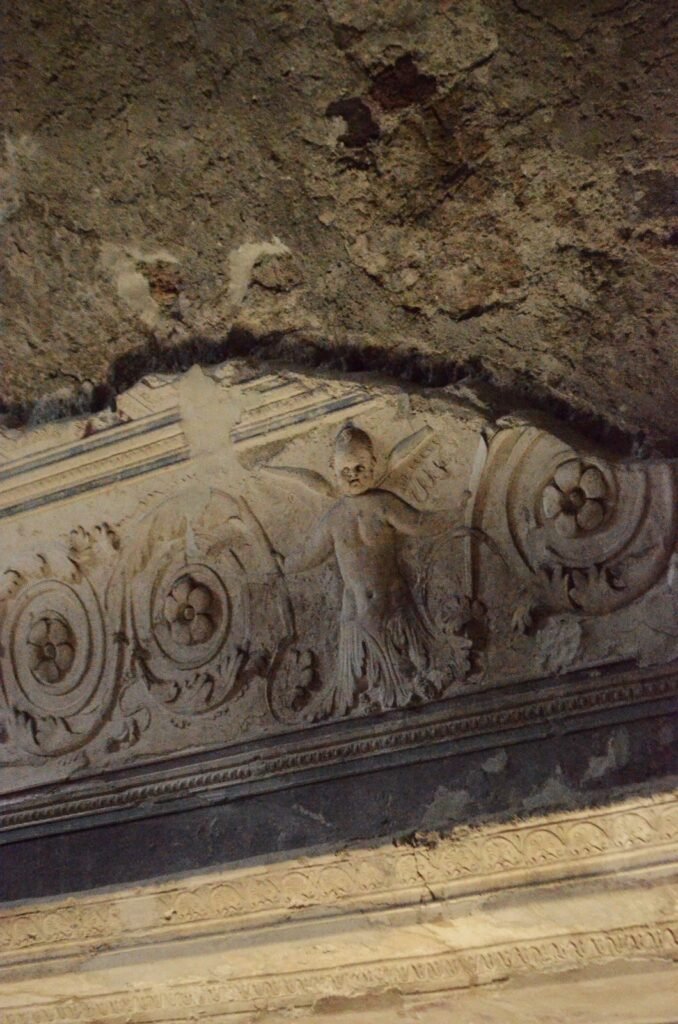
Founded over 2,000 years ago, Pompeii was a bustling city, active in trade, gastronomy, and social life. Its sudden end came with the eruption of Vesuvius, a natural disaster that made it eternal. Every stone and mural reveals myths, curiosities, and Roman daily life: bars, temples, workshops, baths, and bakeries allow you to experience ancient life, while the casts of petrified bodies connect with the most human side of the tragedy.
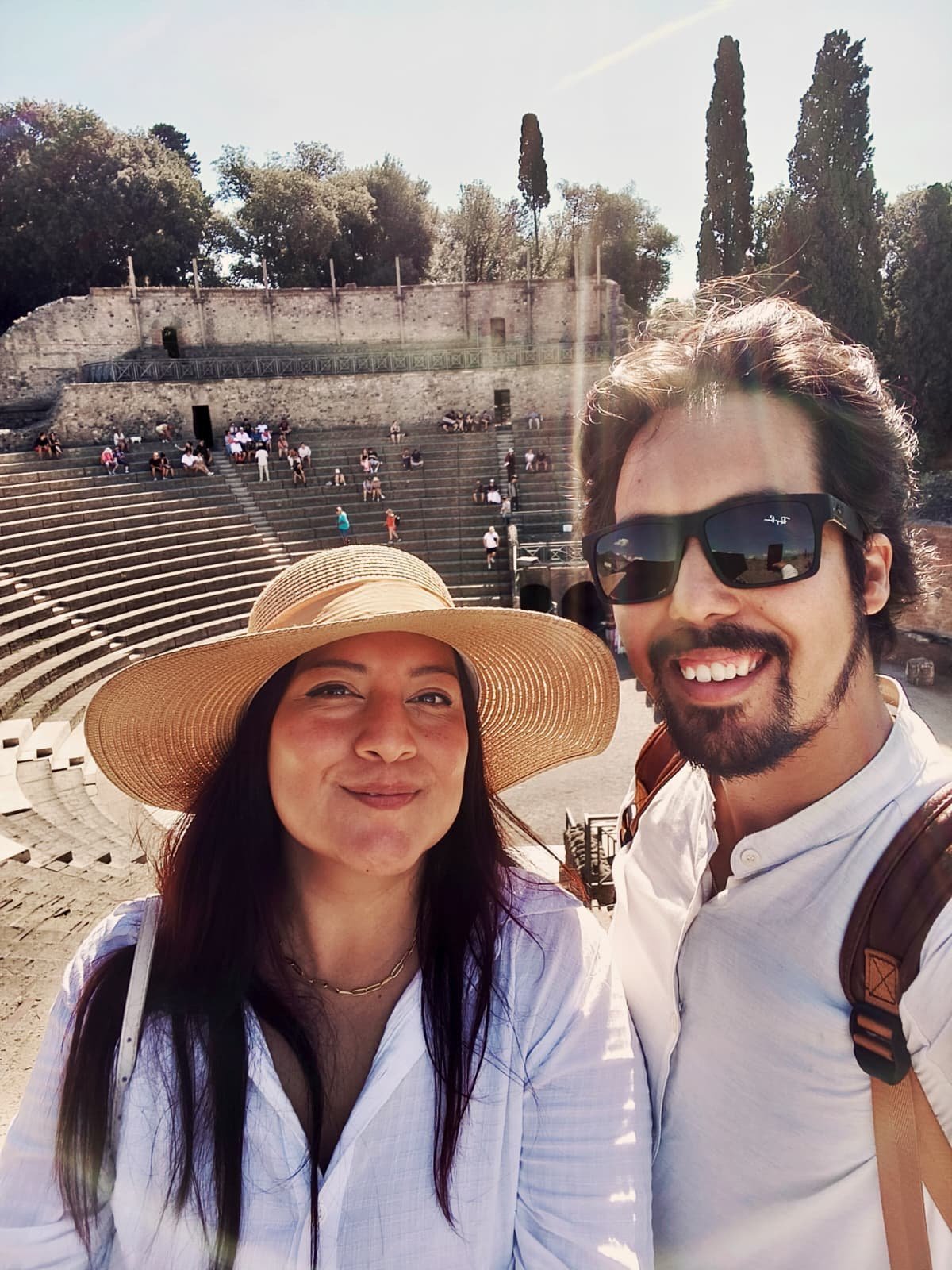
Our Experience in Pompeii - Pietro and Marbella
Our experience as a traveling couple in Pompeii was eye-opening, starting with the transportation, where two violinists boarded to play traditional Neapolitan music! It felt like being in a movie; it was something very unique, and if there are two things we learned about Naples, they are:
- There's chaos, people, and movement everywhere, all the time.
- There's folklore everywhere!
We arrived early, around 9:30 AM, to avoid the crowds, and we were lucky because we only had to wait in line for 15 minutes!
Immediately, we felt overwhelmed seeing the enormous map with so many points of interest marked, but we took a moment to breathe and said, “There’s no need to visit every single one of them”... And honestly, it was the best decision we ever made, because we spent the next 6 hours getting lost among corners, alleys, “domus” (houses), baths, and temples... Forgetting all about rushing.
In the end, we ended up visiting almost all the most important places, because the city itself leads you to them... We only used the map to orient ourselves occasionally, memorized the names of 3 main streets, and without worries, we followed where our feet took us... The best moments arose from getting lost in these corners and chatting with other visitors; human connection makes the journey unique.
Our Route - Recommendations for Exploring Pompeii in the Best Way
We recommend that when you arrive, you enter directly through “Porta Marina”, which are the entrances closest to the Circumvesuviana train station. We took advantage of the Campania ArteCard, and it saved us time and money, as this access allows you to enter through this gate, and the train is included!
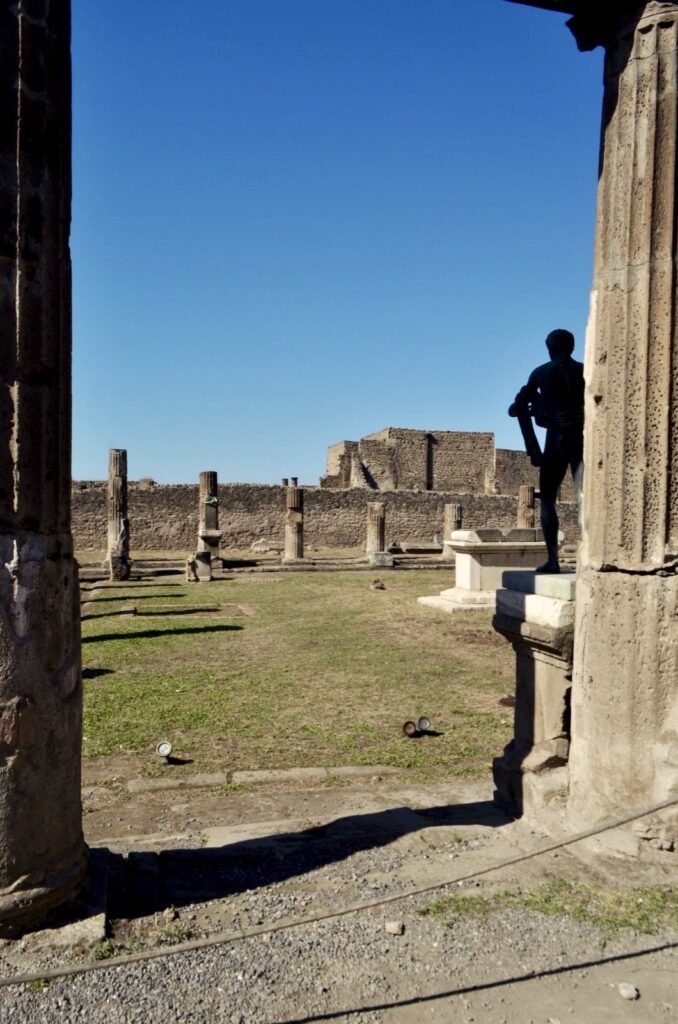
At the entrance, you can't get lost; it's straight ahead, and when you reach the main square, which is where the forum is, explore that area.
When you finish, take the main road (the one with the arches), reach “Via Consolare” and continue straight, visit “Villa dei Misteri”, and return along the same street. Here begins the plan of “getting lost” in the corners of Pompeii...
Key Reference Points from There (In Order):
- House of the Dioscuri
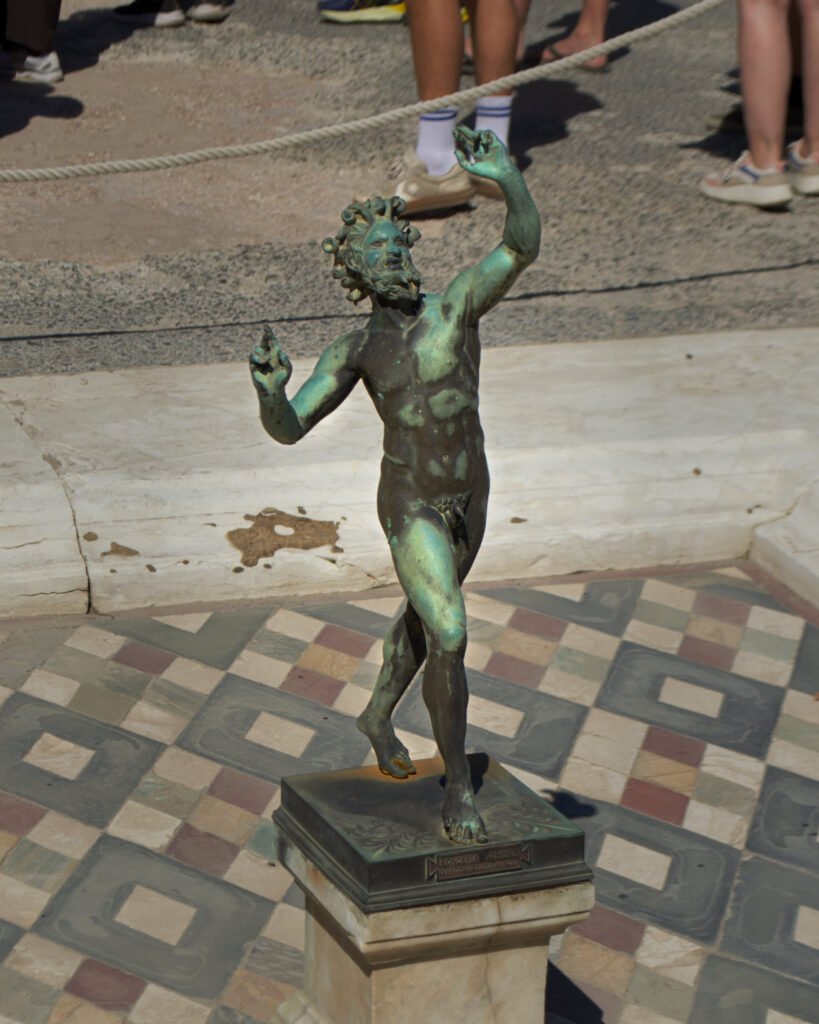
- House of the Faun / Via della Fortuna
- Stabian Baths / Via dell'Abbondanza
- Small Theater and Large Theater
- Insula dei Casti Amanti (Back to Via dell'Abbondanza / Ongoing Excavation Site!)
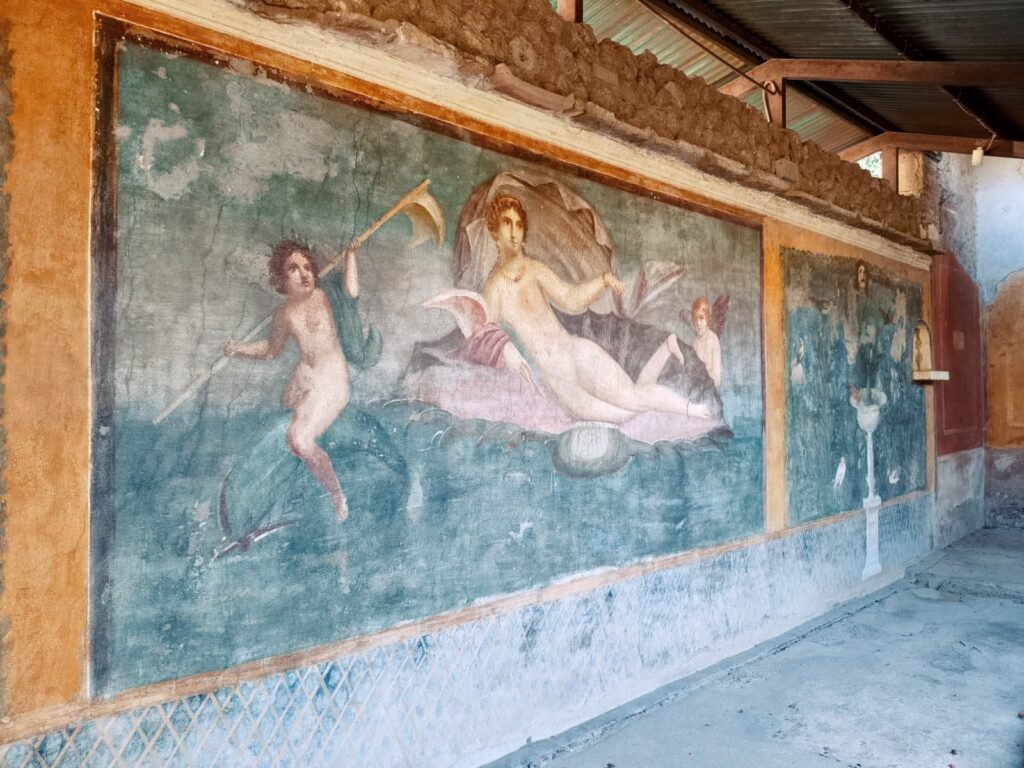
- House of Venus in the Shell (Always on Via dell'Abbondanza)
- And you finish with the impressive Roman Amphitheater!
But beware! You're missing two things:
- If you rented the audio guide like us, you have to go back to Porta Marina, so keep this in mind.
- Visit the Villa della Regina and the Antiquarium of Boscoreale (next to each other), if you paid the extra €8 (Pompeii +) you can take a free shuttle van from Piazza di Porta Marina (3-5 minutes walk from the entrance), which takes you there and back.
Practical Tips for Visiting Pompeii
We share things that seem obvious, but we can all forget...
- Bring a water bottle; there are several free drinking water fountains.
- Bring snacks, because the cheapest panino at the bar costs €8, about $170 Mexican pesos!
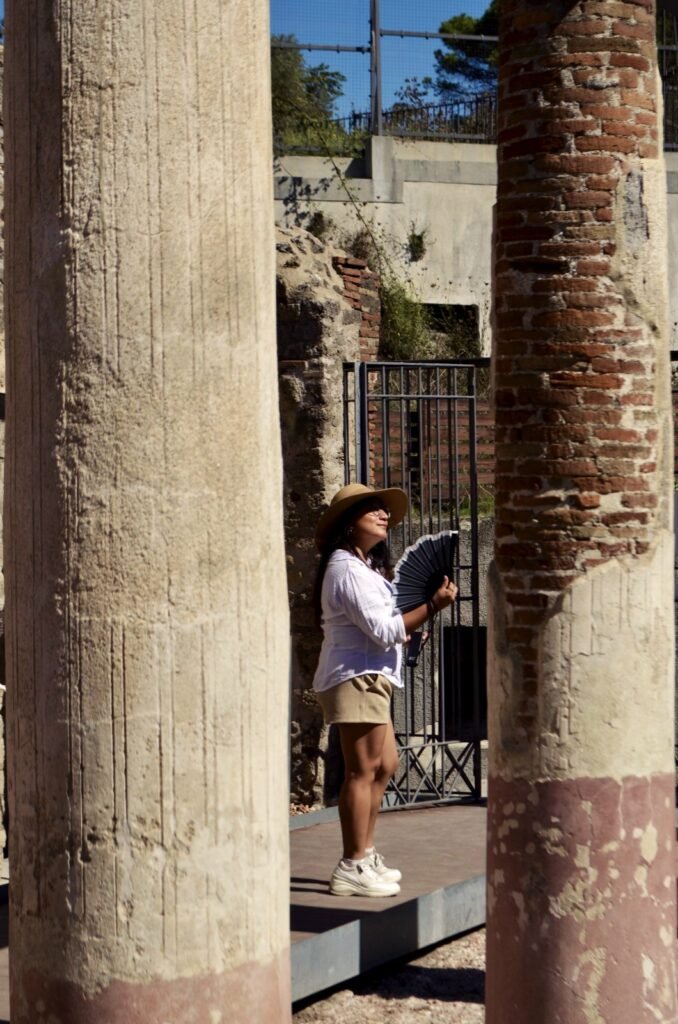
- Bring a hat; the sun is strong.
- If you plan to embark on a 6-hour tour like ours, wear comfortable shoes; the streets are not paved! (Note the sarcasm)
Visiting Pompeii: Tickets, Opening Hours, and How to Get There
Traveling to Pompeii from Naples or Rome is easy, especially with options like the Circumvesuviana train, local buses, and the Campania ArteCard, which includes access and public transport to various historical destinations. We recommend arriving early to avoid long queues and take advantage of discounts with regional passes. Tickets can be purchased online or onsite (from a basic €18 to €49 with an extended ArteCard), and it's advisable to bring water and snacks to avoid high prices inside the park.
- Hours: Usually from 9:00 AM to 7:00 PM, though they vary by season.
- Station: Pompei Scavi-Villa dei Misteri (train from Napoli Centrale).
- Services: Free maps, audio guides (€8), lockers, and rest areas.
Frequently Asked Questions about Hours and Tickets
How much does admission cost?
Express Pass: From €18 online and with ArteCard from €41
Full Pass: From €22 online and with ArteCard from €49
Where to buy tickets?
At the ticket office, on the official park website, or by purchasing the Campania ArteCard online or via its app.
What's the best time to arrive?
Before 9 AM to avoid crowds.
How can I get there from Rome?
You can take a train to Napoli Centrale, and from there take the Circumvesuviana to the “Pompei Scavi-Villa dei Misteri” station.
Circumvesuviana Route
Itineraries and What to See in Pompeii: Ruins, Frescoes, and More
Pompeii is enormous, and every corner has a story. Based on our personal experience, we recommend planning your route according to your interests, or if you're interested in the full 6-hour tour, scroll back up as we've already shared ours!
- Roman Forum: social and political epicenter.
- Amphitheater: one of the oldest in the world (and where Pink Floyd performed their famous “Live at Pompeii”).
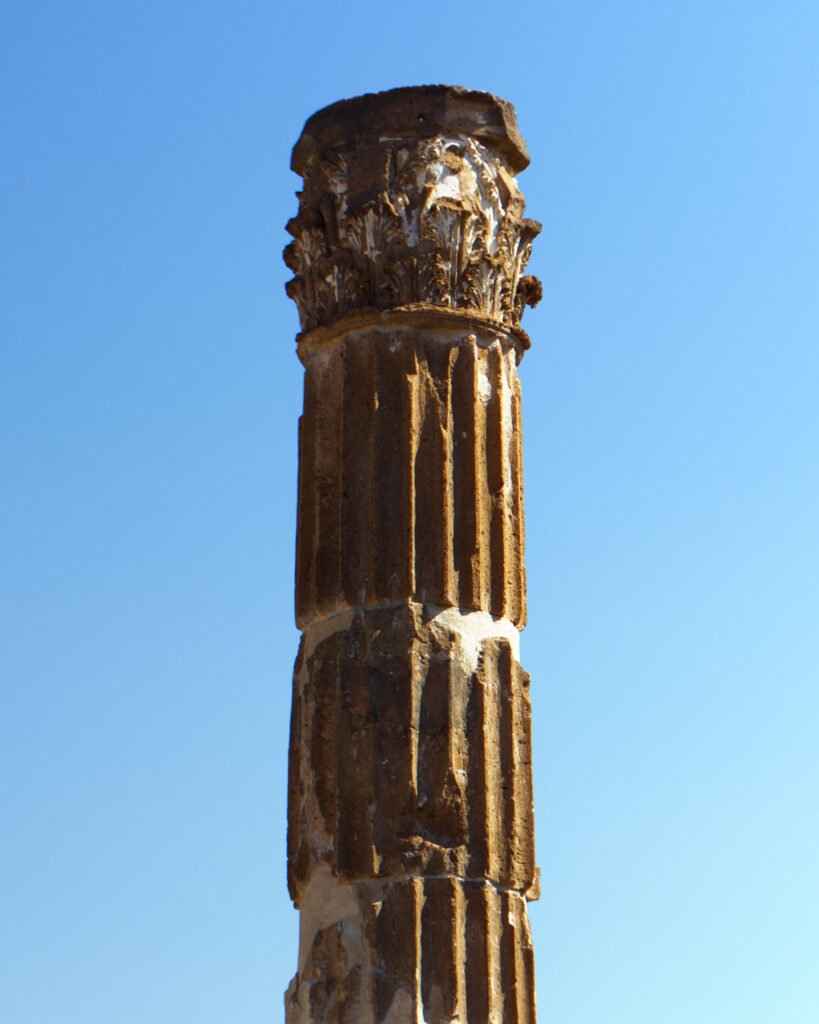
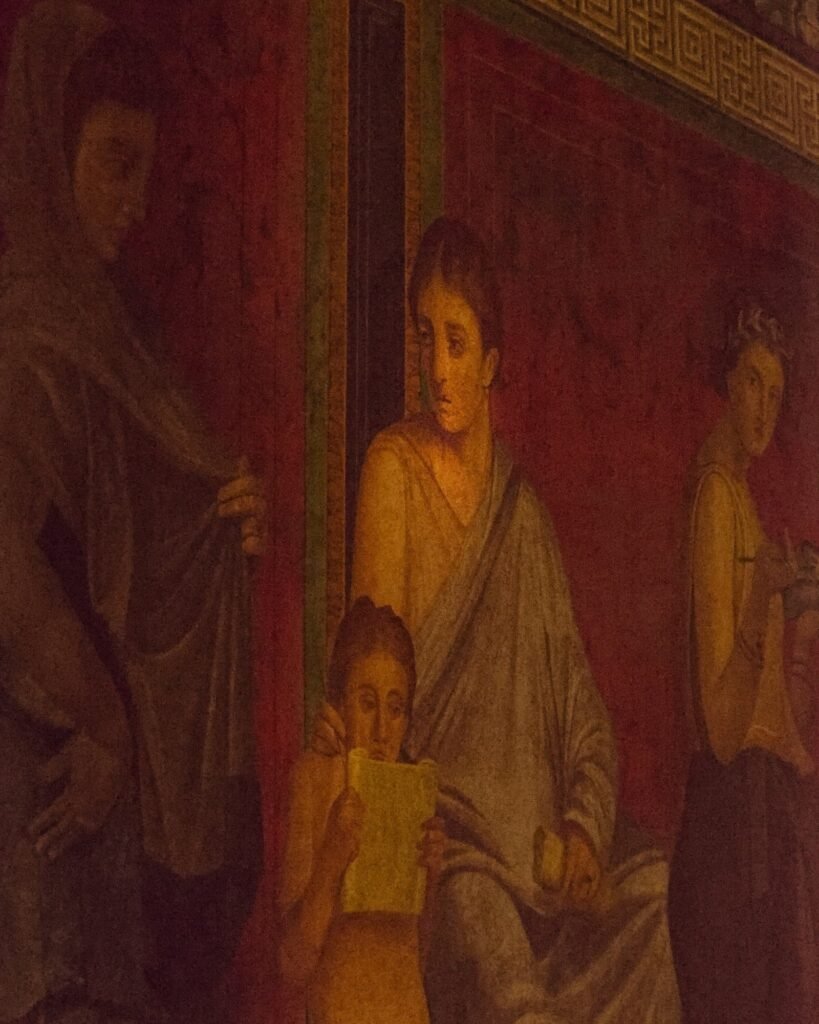
- Villas like the Villa of the Mysteries and Diomedes, with intact frescoes.
- Public baths: the spa of the past where people socialized and closed deals.
- Bakeries, shops, and workshops: unique details about daily life.
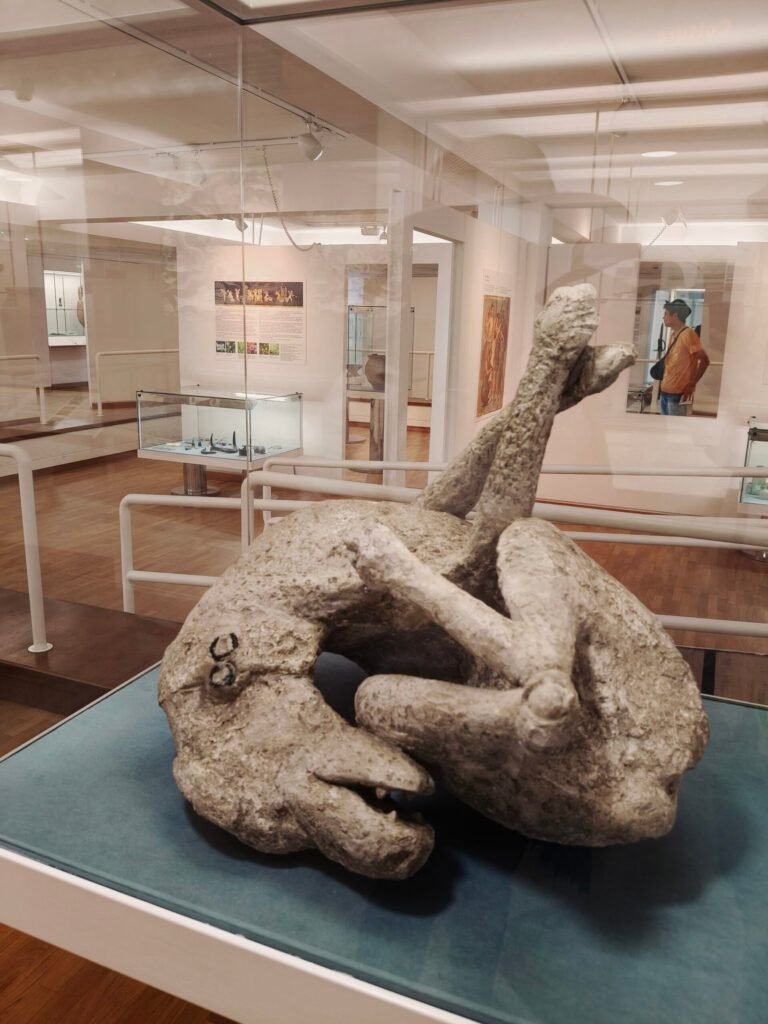
- Casts of petrified bodies, created by Fiorelli in 1863, moving and powerful.
The Useful Map of Pompeii and its Organization
Discover and download digital maps of Pompeii that facilitate orientation within the park, especially useful for planning thematic routes (history, art, couples). Physical maps available at the ticket office include detailed signage for frescoes, forums, temples, and drinking water points.
Vesuvius and its Connection to Pompeii
You cannot understand Pompeii without Vesuvius. This volcano is a natural and cultural attraction in itself. Guided tours to the crater and combined Pompeii-Vesuvius routes are offered for adventure and geology enthusiasts. The panoramic views from the summit are worth the climb and offer another perspective on the tragedy and local life.
Curious Experiences: Petrified Bodies and Life
The casts of petrified bodies are striking for the humanity of their expressions. Fiorelli, a 19th-century archaeologist, created these figures to document postures and emotions frozen in time. Additionally, in Pompeii, there are spaces dedicated to dogs and other animals, as well as exhibitions and everyday objects that connect with domestic life and the sensitive side of history.
Pompeii Today and Weather: Plan Your Visit Comfortably
Today, Pompeii remains a living site, with frequent new discoveries and occasional cultural events. Depending on the time of year, you can expect heat, rain, or mild weather: dress in layers, bring a hat, sunscreen, and comfortable shoes.
- Spring and autumn: ideal weather, fewer tourists.
- Summer: intense heat and higher crowds.
- Winter: cold and rain, but also peace.
Frequently Asked Questions about Pompeii
No FAQs available for category "pompeii-full-guide".
Comparison: Pompeii vs. Herculaneum, Naples, and Other Nearby Destinations
| Destination | Size | Type of Ruins | Ticket Price | Special Experience |
| Pompeii | Enormous | Complete City | €22-41 | Body casts, daily life |
| Herculaneum | Medium | Better preservation | €13-18 | Intact houses, colorful art |
| Naples Museum | Not applicable | Objects and frescoes | €8-15 | National Archaeological Museum |
Discover the Soul of Pompeii, Travel Connecting Past and Present
Pompeii is not just a destination; it's an experience that reinvents travel, connecting history, culture, and emotions. If you're looking for more than just ruins, if you want a real and profound journey, share your concerns, get inspired by our story, and start planning your adventure with high expectations and the best information.