





Located in the heart of the Biellese Alps, the Sanctuary of Oropa is much more than a religious destination. It's a magical corner where spirituality, history, and nature meet in perfect harmony. For those seeking peace, beauty, and a connection with the past, Oropa is a must-visit.
In this guide, we tell you its history, what to see, how to get there, and all the tips to make the most of this site, declared a UNESCO World Heritage Site.
Over 1,600 Years of History
The Sanctuary of Oropa has its origins in the 4th century, when Saint Eusebius of Vercelli brought a wooden statue of the Black Madonna, one of Italy's oldest and most revered Marian representations, from Jerusalem to these mountains.
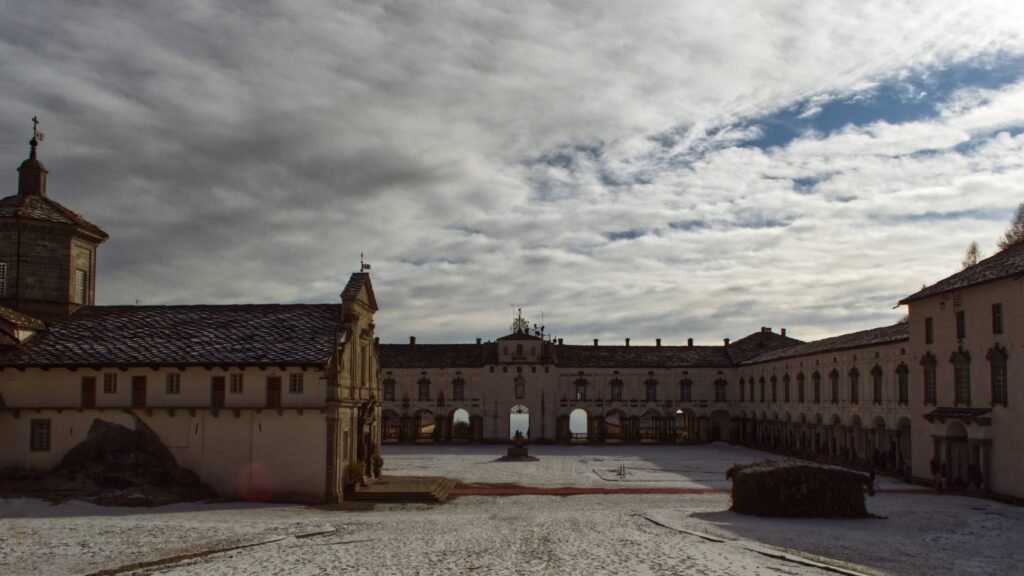
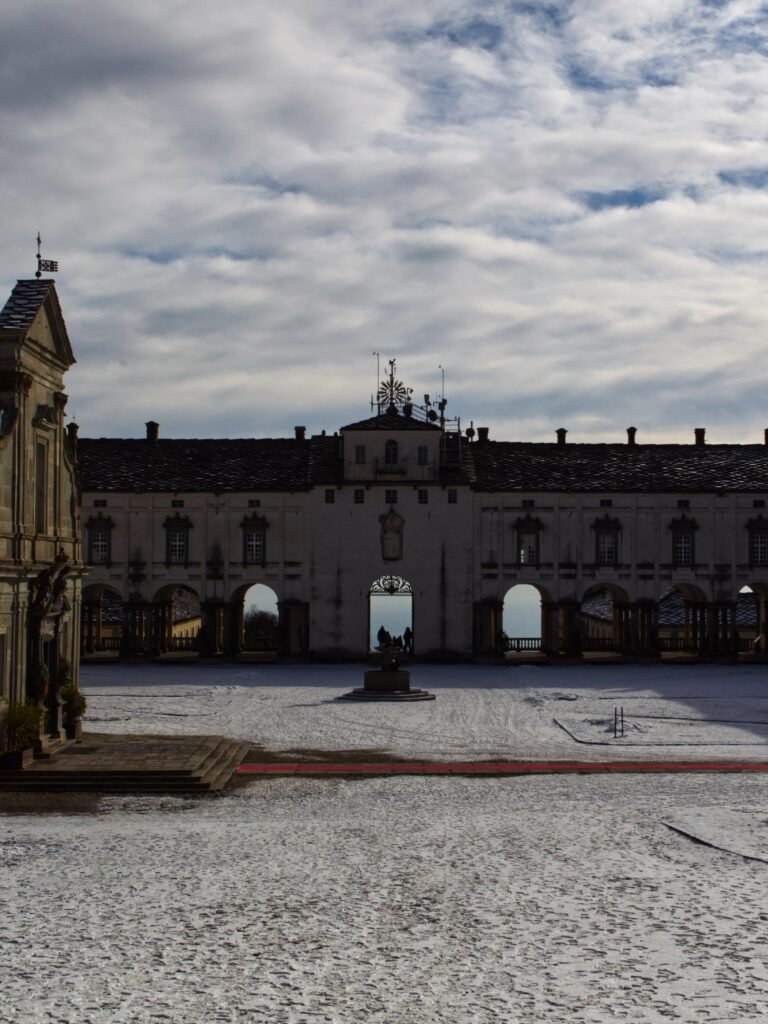
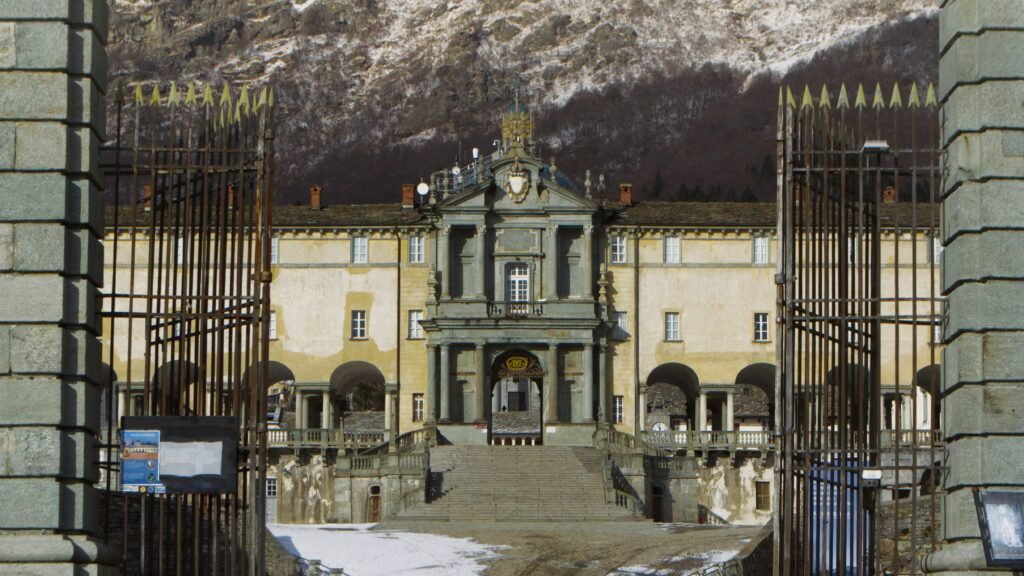
Over the centuries, this place transformed into a monumental complex with churches, chapels, porticoes, and lodgings, all surrounded by an imposing landscape.
Today, the sanctuary is part of the Sacri Monti of Piedmont and Lombardy, a group of pilgrimage sites recognized by UNESCO.
Must-See at the Sanctuary of Oropa
The Old Basilica (Basílica Antica)
It is the spiritual heart of the sanctuary, home to the famous Black Madonna. Its marble altar and silent atmosphere are truly relaxing. You can also walk behind the main altar and admire the mantle made for the Virgin by the locals.
The New Basilica (Basílica Superiore)
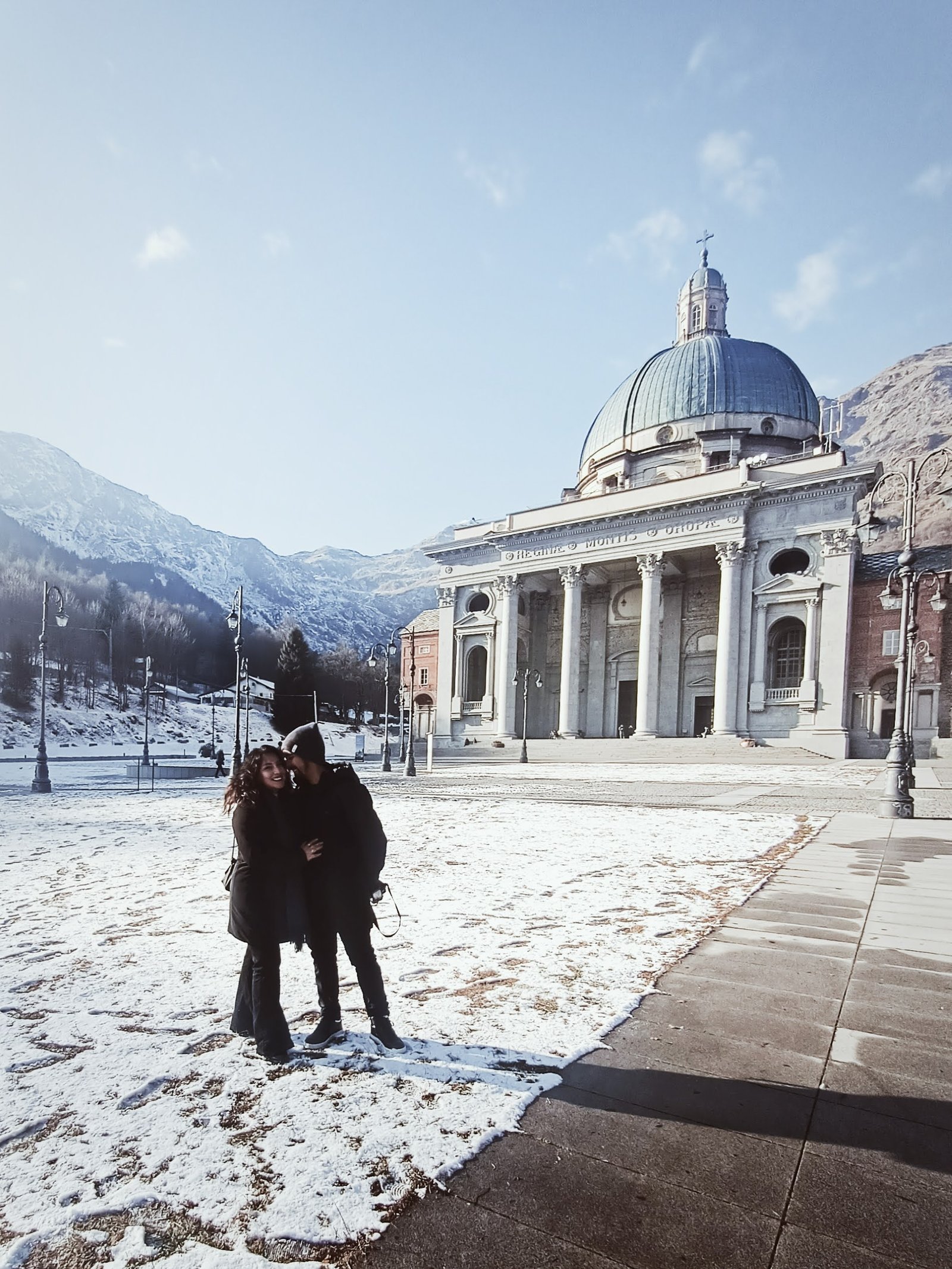
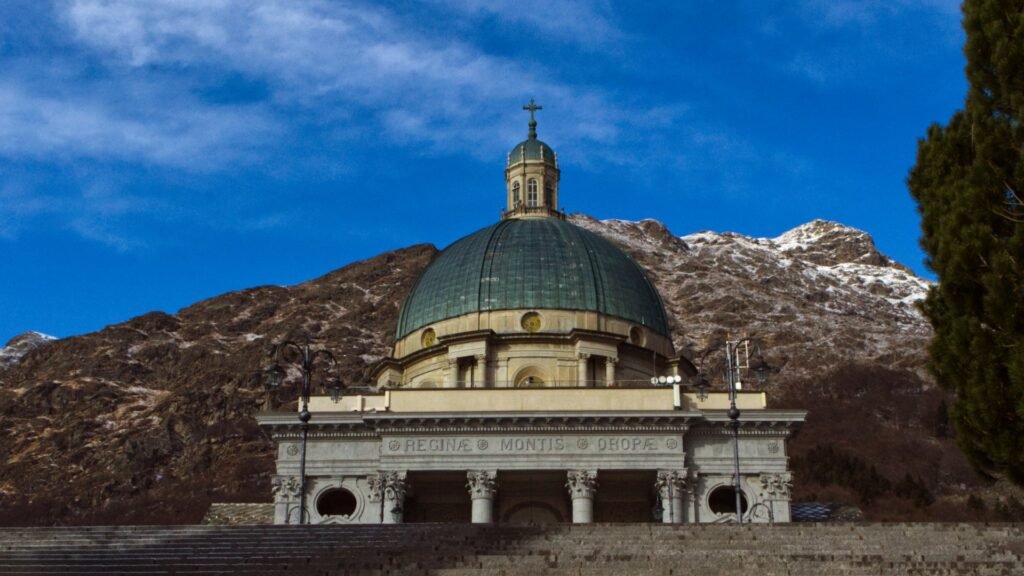
Imposing on the outside and serene on the inside. It was inaugurated in 1960 and is surrounded by an impressive monumental portico. From its esplanade, there's a spectacular panoramic view.
The Sacro Monte di Oropa
One of the most fascinating corners of the complex, a UNESCO World Heritage site, this collection of 12 Baroque chapels decorated with over 900 sculptures narrates the life of the Virgin Mary through realistic sculptures. A wonderful walk between art and faith.
The Panoramic Views
From the sanctuary, you can admire a spectacular landscape of mountains and valleys. And if you dare to climb a little higher, the views from the top are unforgettable, both in winter with snow-covered mountains and in spring with green meadows and flower gardens—two completely distinct and unforgettable sights.
Hiking in the Biellese Alps
For nature lovers, there are several hiking trails starting from Oropa. One of the most popular leads to Lake Mucrone, a crystal-clear body of water at 1,900 meters (6,234 feet) altitude.
Practical Information for Your Visit
Location: Strada del Santuario di Oropa, 13814 Biella, Italy.
Hours: Open all year from 7:00 AM to 7:00 PM (Churches).
Admission: Free (Some areas like the museum may have a symbolic cost)
Recommended time: 2 to 4 hours (a full day if you wish to hike in the mountains)
A Bordo Tip: Look for available audio guides in Italian, English, or French.
How to Get to the Sanctuary of Oropa
Oropa is located 15 km from Biella and is accessible by various means of transport.
| Mode of Transport | Duration | Details |
|---|---|---|
| 🚆 Train + Bus | 2 hours | From Milan or Turin, take a train to Biella, then a bus to Oropa. |
| 🚗 Car | 1.5 - 2 hours | Scenic drive with free parking at the sanctuary. |
| 🚡 Cable Car | 10 minutes | From the sanctuary, the cable car goes up to Lake Mucrone for spectacular views. |
Where to Eat in Oropa?
You can't leave without trying the local specialty: Polenta Concia, a creamy and comforting typical mountain dish made with polenta, butter, and cheese—deliciously irresistible.
| Restaurant | Specialty |
| 🍽 Ristorante Bar Valfrè | Polenta concia and spectacular views. |
| 🍷 Ristorante Croce Bianca | Piedmontese wines and traditional cuisine. |
Frequently Asked Questions
No FAQs available for category "oropa".
Is Oropa Worth Visiting? Our Final Opinion
Definitely yes. Oropa is a destination that has it all: history, spirituality, stunning landscapes, and local culture. It's one of those experiences that stay etched in your memory.
If you're planning a trip to Italy, be sure to include the Sanctuary of Oropa in your itinerary. It's a place that invites reflection, peace, and connection with nature.
💬 Have you visited Oropa?
Save this article if you plan to visit northern Italy, and share it with that person who is always looking for tranquil, history-filled corners. Did you know about this sanctuary in the Alps? Would you like to include it in your trip?
Share your experience in the comments!